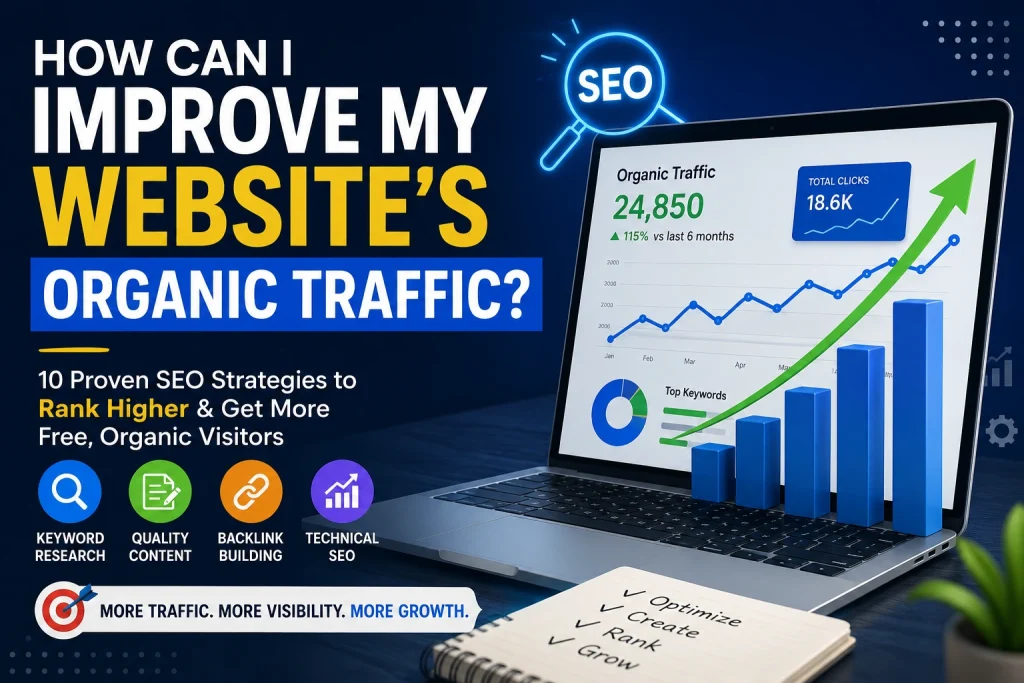
If you’re wondering, “How can I improve my website’s organic traffic?”, you’re not alone. Every business owner wants more visitors from Google without relying on paid ads. The good news is that increasing organic traffic is possible with the right SEO strategy and consistent effort.
Organic traffic comes from users who find your website through search engines like Google. Unlike paid advertising, organic traffic can continue to grow over time and provide long-term value for your business.
What Is Organic Traffic?
Organic traffic refers to visitors who arrive at your website by clicking unpaid search engine results. These users are actively searching for information, products, or services related to your business, making them more likely to become customers.
For example, if someone searches for “affordable SEO specialist in the Philippines” and finds your website on Google’s first page, that visit is considered organic traffic.
10 Proven Ways to Improve Your Website’s Organic Traffic
1. Research the Right Keywords
Everything starts with keyword research. Identify what your target audience is searching for and create content around those terms.
Helpful keyword research tools include:
- Google Keyword Planner
- Google Search Console
- Ahrefs
- SEMrush
- Ubersuggest
Focus on keywords that have:
- High search intent
- Reasonable search volume
- Low to medium competition
2. Publish High-Quality Content
Google rewards websites that provide helpful, accurate, and valuable information.
Create content that:
- Answers common questions
- Solves user problems
- Includes examples
- Is easy to read
- Uses headings and bullet points
Instead of writing for search engines, write for people first.
3. Optimize Your On-Page SEO
Every page should include:
- An SEO-friendly title
- Meta description
- Proper H1, H2, and H3 headings
- Keyword placement in natural locations
- Internal links
- Optimized images with descriptive alt text
These improvements help search engines understand your content while improving user experience.
4. Improve Website Speed
A slow website causes visitors to leave before your page loads.
You can improve speed by:
- Compressing images
- Using WebP image format
- Enabling browser caching
- Using a reliable hosting provider
- Minimizing unnecessary plugins
- Using a Content Delivery Network (CDN)
Fast websites provide a better user experience and can contribute to better search rankings.
5. Make Your Website Mobile-Friendly
More than half of internet users browse on mobile devices. Google also uses mobile-first indexing, meaning it primarily evaluates the mobile version of your website.
Ensure your website:
- Looks good on smartphones
- Loads quickly
- Has readable text
- Uses responsive design
- Features easy-to-click buttons
6. Build Internal Links
Internal links connect related pages on your website.
Benefits include:
- Helping Google discover more pages
- Keeping visitors engaged longer
- Distributing page authority across your site
- Improving navigation
For example, a blog about SEO can link to your SEO services page.
7. Earn High-Quality Backlinks
Backlinks remain one of Google’s strongest ranking signals.
You can earn backlinks by:
- Publishing original content
- Writing guest posts
- Creating useful guides
- Producing infographics
- Building relationships with industry websites
Quality matters more than quantity.
8. Optimize for Local SEO
If you serve customers in a specific area, local SEO is essential.
Optimize your:
- Google Business Profile
- Business citations
- Local keywords
- Contact information
- Customer reviews
Local SEO helps your business appear in Google Maps and local search results.
9. Monitor Your Website Performance
Use analytics tools to understand what’s working.
Important metrics include:
- Organic traffic
- Keyword rankings
- Bounce rate
- Click-through rate (CTR)
- Average engagement time
- Conversions
Review your data regularly and update your strategy accordingly.
10. Update Existing Content
SEO isn’t a one-time task.
Refresh older articles by:
- Adding new information
- Updating statistics
- Improving readability
- Including recent examples
- Optimizing for new keywords
Fresh content often performs better in search results.
Common Mistakes That Hurt Organic Traffic
Avoid these common SEO mistakes:
- Publishing thin or duplicate content
- Keyword stuffing
- Ignoring technical SEO
- Slow website speed
- Broken links
- Missing meta descriptions
- Poor mobile experience
- Not updating old content
- Forgetting internal linking
How Long Does It Take to Increase Organic Traffic?
SEO takes time.
Generally, you can expect:
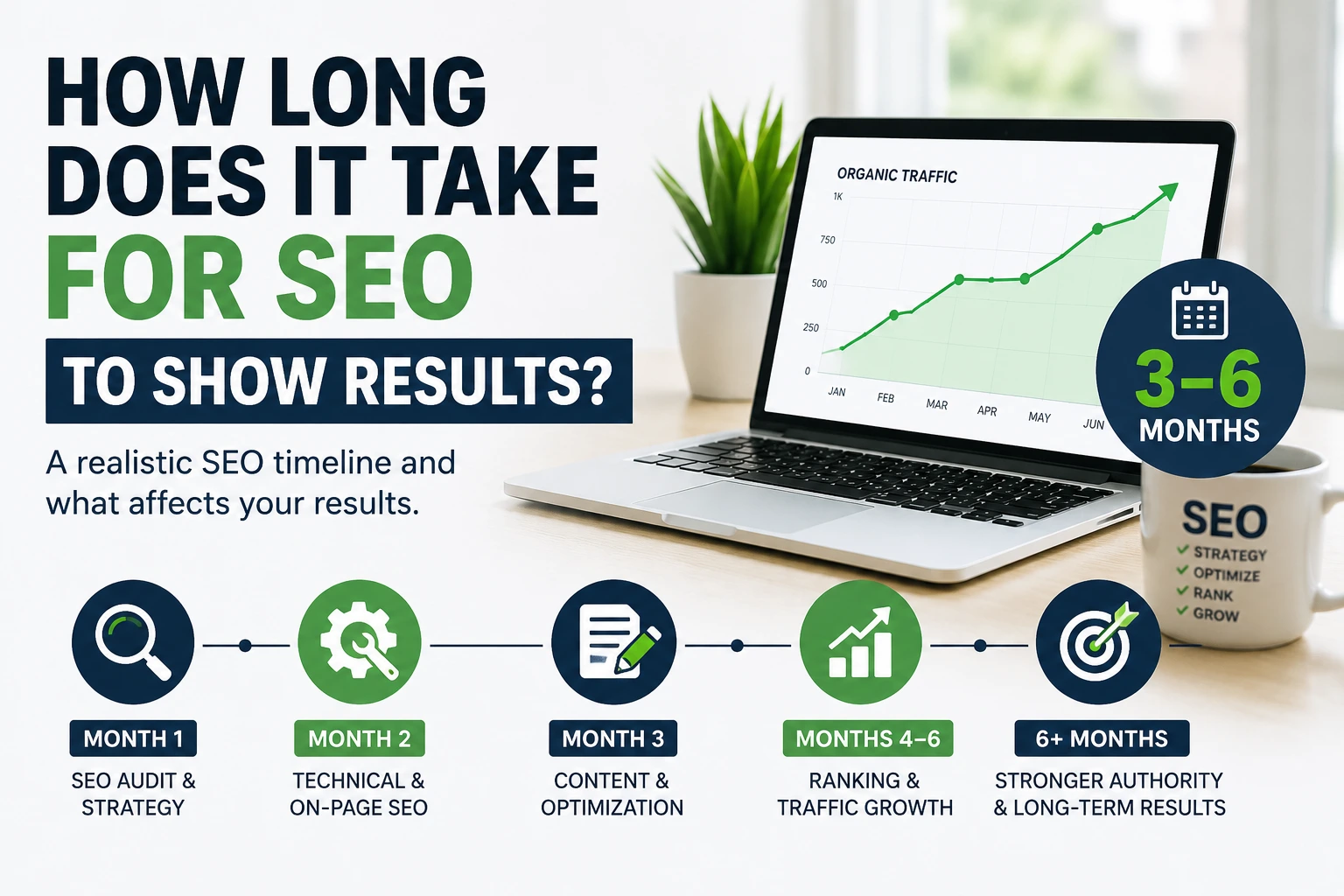
- 1–3 months: Technical improvements and indexing
- 3–6 months: Initial keyword ranking improvements
- 6–12 months: Significant growth in organic traffic
- 12+ months: Strong authority and consistent traffic with ongoing optimization
Results vary depending on competition, website age, and the quality of your SEO efforts.
Final Thoughts
Improving your website’s organic traffic requires patience, consistency, and a well-planned SEO strategy. By focusing on keyword research, valuable content, technical optimization, user experience, and continuous improvement, you can attract more qualified visitors and grow your business online.
Remember, SEO is an investment—not a quick fix. Every improvement you make today contributes to stronger visibility and better search rankings in the future.
If you’re looking for professional guidance, working with an experienced SEO specialist can help you identify opportunities, fix technical issues, and develop a strategy tailored to your business goals.

Kenneth Relox is an Expert Freelance SEO Specialist in the Philippines specializing in Technical SEO, WordPress SEO, Local SEO, Content SEO, and Generative Engine Optimization (GEO). With over a decade of professional experience in Search Engine Optimization, Global E-Commerce Quality Analysis, and Content Moderation Quality Assurance, he combines technical expertise with data-driven strategies to help businesses achieve sustainable online growth.
In 2026, Kenneth enhanced his SEO expertise by completing the PinoySEO Training and Internship Program, where he gained advanced knowledge in WordPress SEO, technical website optimization, AI-powered search optimization, and GEO (Generative Engine Optimization). This experience strengthened his ability to help businesses adapt to the evolving landscape of search engines and AI-driven search experiences.
As the founder of Kenneth Relox – SEO & GEO Services, Kenneth is committed to helping businesses improve their online visibility, increase organic traffic, generate qualified leads, and achieve long-term success through ethical and results-focused SEO strategies.
When he’s not optimizing websites, Kenneth enjoys playing basketball, working out, discovering local travel destinations in the Philippines, and staying up to date with the latest trends in SEO, AI, and digital marketing.